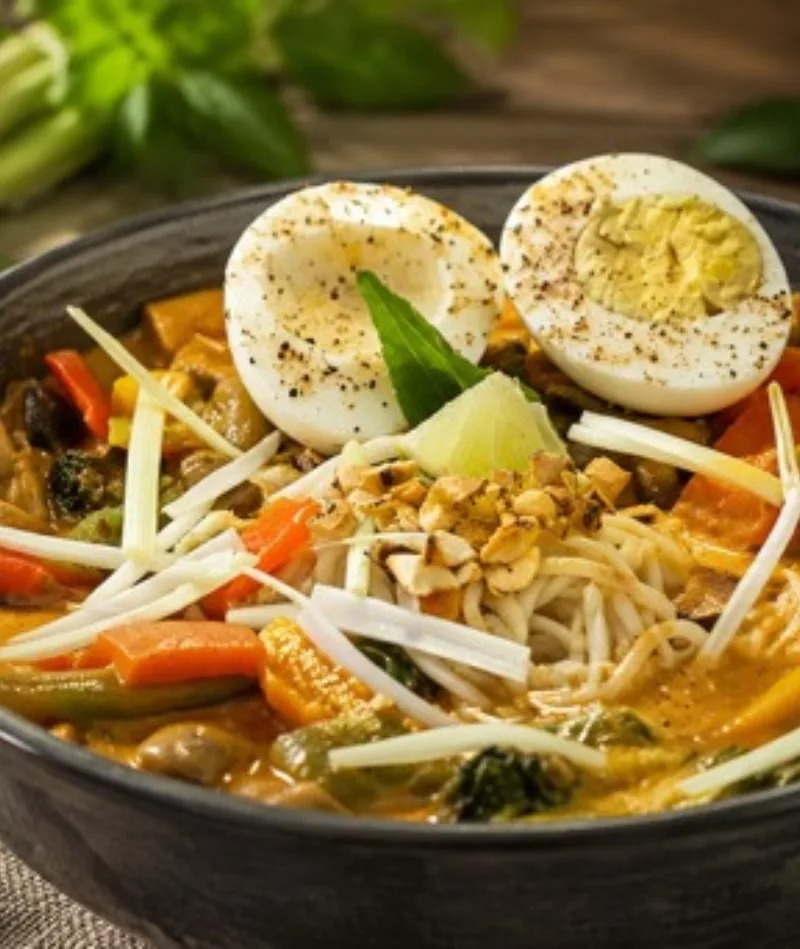
A fragrant oil-free Thai curry with galangal and basil
Yields: 1 Serving approx
Ingredients
Aromatic Paste Base:
- 1/2 cup Onion, roughly chopped
- 1 cup Tomatoes, roughly chopped
- 1/2 tsp Fresh Ginger, minced
- 1/2 Garlic Clove, minced
- 1/2 Dried Red Chili (adjust to taste)
Infusion Aromatics (Added during cooking, not blended):
- 1 small piece Dried Galangal or Dried Ginger
- 1 tsp Ready-made Thai Basil Paste (strictly check label for zero added sugar; adjust to taste)
Curry Liquid:
- 1 cup Homemade Thin Low-Fat Coconut Milk (If using store-bought coconut milk, dilute 1/2 cup store-bought coconut milk with 1 cup water)
Vegetables:
- 1.5 to 2 cups Mixed Vegetables (e.g., sliced carrots, red bell peppers, broccoli florets, mushrooms)
Low-Calorie Base Options (Choose One):
- Option 1: 1/2 or 2/3 cup (approx. 100g- 150g) Shirataki / Konjac Noodles or Shirataki Rice (~11 calories per serving, widely available on Amazon)
- Option 2: 1/2 or 1 cup Homemade Cauliflower Rice
Protein Add-Ons (Choose One/two to add to your dish):
- Hard-Boiled Egg (halved, sprinkled with black pepper)
- 3 Egg Whites (scrambled or boiled)
- 80g Boiled Shredded Chicken
- 80g Low-Fat Cottage Cheese / 100g - silken Tofu
Garnishes:
- 1/4 cup Fresh Thai Basil Leaves
- Fresh Leek juliennes (thinly sliced matchsticks)
- Air-fried garlic, onion, or galangal bits (for oil-free crunch) Fresh Lime wedges
Procedure
- Why We Use an Onion-Tomato Base: Traditional Thai curry relies on heavy, full-fat coconut milk for richness. Because we are making a healthy, low-fat version, we use a roasted onion and tomato base to give the curry a rich, thick texture without excess fat and calories.
Roast & Blend the Base Aromatics:
- Dry-roast the chopped onions, tomatoes, minced ginger, garlic, and 1/2 dried red chili in a warm non-stick pan until slightly charred and fragrant.
- Transfer them to a blender and process until completely smooth.
Cook & Infuse the Base (Can be prepped in advance):
- Pour the smooth onion-tomato puree back into the non-stick pan.
- Add the whole piece of dried Galangal / dried ginger (simmer whole to release authentic Thai flavors).
- Add 1 tsp of sugar-free Thai basil paste or dried Thai herbs.
- Cook over medium heat, stirring frequently, until the raw taste vanishes and the base deepens in color.
Saute the Vegetables Separately:
- In a separate non-stick pan, toss your mixed vegetables with 1 tablespoon of the store bought sugar free Thai curry base paste.
- Sauté on low heat so the vegetables absorb the Thai flavors while staying crisp-tender.(1-2 mins only)
Finish the Curry Sauce:
- Pour your low-fat coconut milk into the pan with the cooked base.
- Simmer gently on low heat while stirring so the sauce integrates smoothly. Add the seasoned, crisp-tender vegetables.
Prepare the Noodles / Rice Base:
- Shirataki / Konjac Noodles or Rice: Drain and rinse thoroughly under cold water for 2 minutes, then add directly to the bowl. (Optional: Dry-roast in a non-stick pan for 2 minutes to remove extra moisture).
- Cauliflower Rice: Steamed or dry-sauteed in a pan for 3-4 minutes until tender.
Assemble & Garnish:
- Place your choice of Shirataki base or Cauliflower Rice into a wide serving bowl.
- Pour the hot Thai curry and vegetables over top.
- Add your selected protein choice on top or alongside.
- Finish with fresh Thai basil leaves, leek juliennes, air-fried garlic/onion/galangal bits, and a fresh squeeze of lime juice.
Pro-Tips
- Check the Label for Hidden Sugar: Always turn the jar around and ensure the ingredients list shows 0g added sugar so your Thai curry paste stays strictly low-calorie.
- Diluting Store-Bought Coconut Milk: Canned coconut milk is naturally dense. Blending 1/2 cup store-bought coconut milk with 1 cup water maintains creaminess while keeping calories in check.
- Air-Fried Crunch: Air-frying garlic or onion bits gives you that classic Thai fried-shallot crunch completely oil-free!
Updated Calorie & Macro Breakdown
- Base Thai Curry + Veggies + 2/3 cup Shirataki Noodles: 250 Calories (Accounting for natural fats in low-fat coconut milk, vegetables, and aromatic base)
- With 1 Whole Egg: ~240 Calories (approx. 28g Protein, 7g Fat, 13g Carbs) (Note: Calorie counts are estimates and exclude cooking oils used for pan-searing. Sugar-free red chilli sauce adds )
Adding Your Protein Choice:
- + 1 Hard-Boiled Egg (+ 70 Cals): Total = 320 Calories (18g Protein | 13g Fat | 32g Net Carbs)
- + 2-3 Egg Whites (+ 35 Cals): Total = 285 Calories (18g Protein | 8g Fat | 32g Net Carbs)
- + 80g Boiled Shredded Chicken (+ 110 Cals): Total = ~360 Calories (30g Protein | 10g Fat | 32g Net Carbs)
- + 80g Low-Fat Tofu (+ 60 Cals): Total = ~310 Calories (14g Protein | 11g Fat | 34g Net Carbs)